

Shockwave Therapy for Erectile Dysfunction
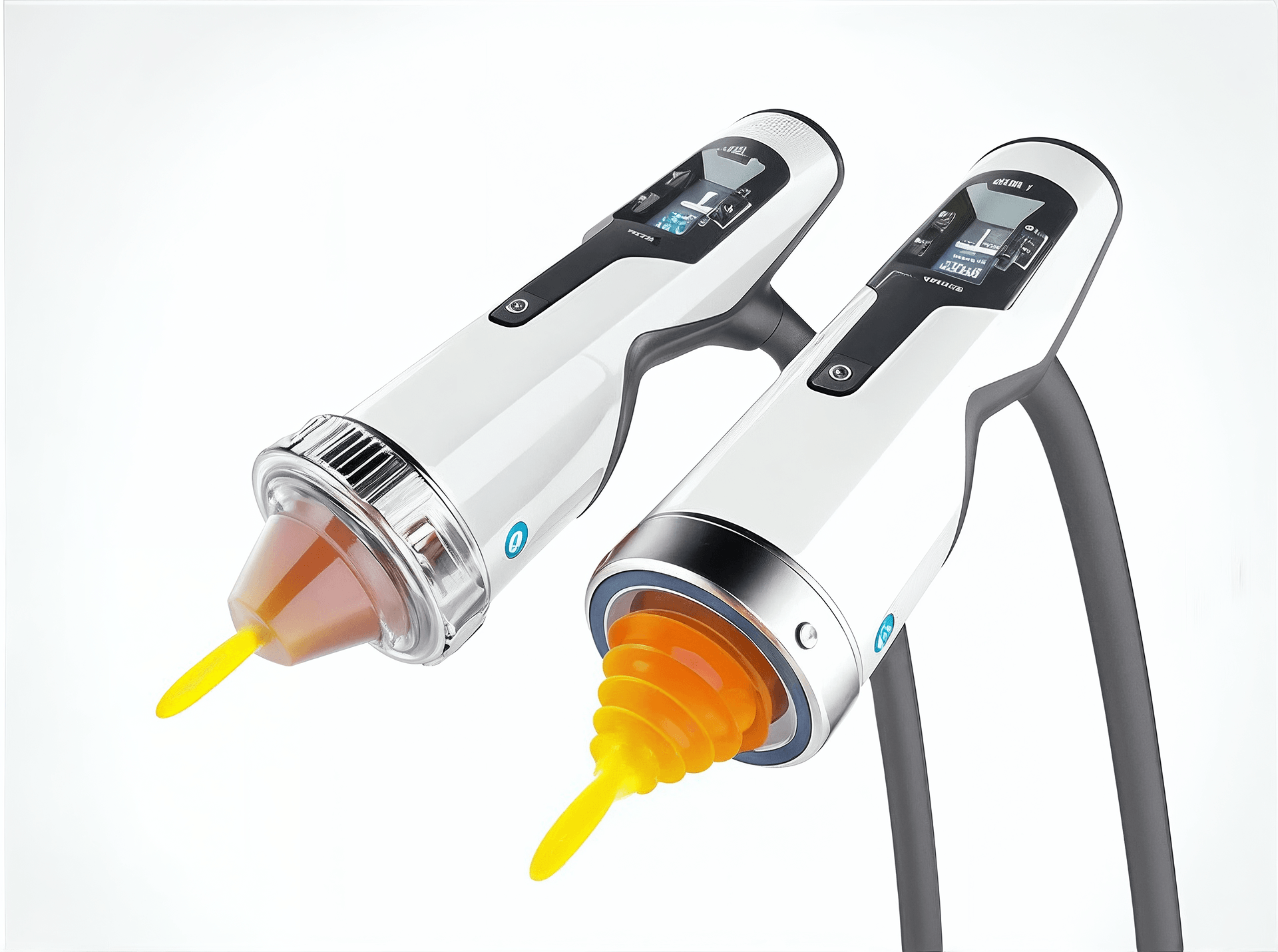
at BeYoungerPrime clinic, we use a focused shock wave system (storz duolith) to deliver evidence-based treatment
dysfunction. It delivers energy directly to the corpora cavernosa, helping improve
blood flow and vascular function.
Radial (acoustic) wave devices are superficial and dissipate quickly, limiting
penetration to erectile tissue. A randomized, sham-controlled trial showed no benefit
compared with placebo.
Focused systems such as the Storz Duolith SD1 have randomized, placebo-
controlled clinical data demonstrating improved erectile outcomes in appropriately
selected men.
The clinical evidence for shock wave therapy in ED is based on focused—not
radial—technology.
References
Olsen et al., Scand J Urol 2015; Lu et al., Eur Urol 2017; Kalyvianakis et al., J Urol
2022; European Association of Urology; American Urological Association.
How It Works
Unlike medications that temporarily improve erections, shockwave therapy is designed to restore the underlying vascular health of the penis, helping the body regain its natural erectile function.
.avif)
.avif)
What Is Shockwave Therapy?
These sound waves pass through the skin and stimulate biological repair processes within the erectile tissue.

How Erections Normally Occur
Shockwave therapy works by stimulating repair of the penile blood vessels and surrounding tissue.
.avif)
How Shockwave Therapy Improves Erectile Function
Acoustic waves create controlled micro-stimulation in penile tissue, activating the release of growth factors. This encourages angiogenesis (formation of new blood vessels), improving blood flow during erections.
Shockwave therapy enhances the function of existing blood vessels and increases nitric oxide signaling. This improves the ability of penile arteries to dilate and fill the erectile chambers.
Healthy smooth muscle is necessary to trap blood inside the penis during erection.Shockwave therapy may improve smooth muscle activity and tissue elasticity, supporting stronger erections.
Shockwave therapy stimulates release of key repair molecules:
These effects help restore erectile tissue health over time.
.avif)
Who Is the Best Candidate for Shockwave Therapy?
Good candidates include men who:
Treatment Protocol
.avif)
Success Rates
Many patients report:
.avif)
Combining Shockwave Therapy With Other Treatments
Safety and Side Effects
.avif)
.avif)
When Do Results Appear?
.avif)
Medical Disclaimer
References: Shockwave Therapy for Erectile Dysfunction
Major Clinical Trials
- Vardi Y, Appel B, Kilchevsky A, Gruenwald I.
Low-Intensity Extracorporeal Shock Wave Therapy for Erectile Dysfunction: A Randomized, Double-Blind, Sham-Controlled Study.
European Urology. 2012;62(5):870–876.
This landmark randomized study showed significant improvement in erectile function in men with vasculogenic ED. - Kitrey ND, Gruenwald I, Appel B, Shechter A, Massarwi O, Vardi Y.
Penile Low-Intensity Shock Wave Treatment Is Able to Shift PDE5i Non-Responders to Responders.
European Urology. 2016;70(3):556–562.
Demonstrated that shockwave therapy can convert men who previously did not respond to Viagra/Cialis into responders. - Fojecki GL, Tiessen S, Osther PJS.
Effect of Low-Intensity Extracorporeal Shockwave Therapy on Erectile Dysfunction: A Randomized Clinical Trial.
Sexual Medicine. 2017;5(1):e44–e52.
Meta-Analyses and Systematic Reviews
- Lu Z, Lin G, Reed-Maldonado A, Wang C, Lee YC, Lue TF.
Low-Intensity Extracorporeal Shock Wave Treatment Improves Erectile Function: A Systematic Review and Meta-Analysis.
European Urology. 2017;71(2):223–233. - Dong L, Chang D, Zhang X, et al.
Effect of Low-Intensity Extracorporeal Shock Wave Therapy on Erectile Dysfunction: A Systematic Review and Meta-Analysis.
American Journal of Men's Health. 2019;13(2). - Man L, Li G.
Low-Intensity Extracorporeal Shock Wave Therapy for Erectile Dysfunction: A Systematic Review and Meta-Analysis.
Urology. 2018;119:97–103.
Mechanism of Action Studies
- Gruenwald I, Appel B, Vardi Y.
Low-Intensity Shockwave Treatment — A Novel Effective Treatment for Erectile Dysfunction in Severe ED Patients Who Respond Poorly to PDE5 Inhibitors.
Journal of Sexual Medicine. 2012. - Qiu X, Lin G, Xin Z, et al.
Effects of Low-Energy Shockwave Therapy on the Erectile Function and Tissue of a Diabetic Rat Model.
Journal of Sexual Medicine. 2013.
These studies demonstrate:
- angiogenesis (new blood vessel formation)
- endothelial repair
- nitric oxide signaling improvement
Urology Guidelines and Expert Reviews
- American Urological Association (AUA) Guidelines on Erectile Dysfunction.
Burnett AL et al.
Journal of Urology. 2018. - European Association of Urology (EAU) Guidelines on Sexual and Reproductive Health.
EAU Guidelines Office, 2023.
Both guidelines recognize shockwave therapy as an investigational but promising treatment for vasculogenic ED.
Review Articles
- Clavijo RI, Kohn TP, Kohn JR, Ramasamy R.
Effects of Low-Intensity Extracorporeal Shockwave Therapy on Erectile Dysfunction: A Systematic Review and Meta-Analysis.
Journal of Sexual Medicine. 2017. - Ramasamy R, et al.
Low-Intensity Shockwave Therapy for Erectile Dysfunction: A Review of the Evidence.
Current Urology Reports. 2019.
Key Findings from the Literature
Across studies:
- Significant improvement in IIEF-EF scores (International Index of Erectile Function)
- Best results in vasculogenic ED
- May convert PDE5 inhibitor non-responders into responders
- Works through angiogenesis and endothelial repair
Improvement rates in studies commonly range from:
- 60–80% for mild ED
- 50–70% for moderate ED
Example Citation for Your Website
Selected References
- Vardi Y, et al. European Urology. 2012.
- Lu Z, et al. European Urology. 2017.
- Kitrey ND, et al. European Urology. 2016.
- Clavijo RI, et al. Journal of Sexual Medicine. 2017.
- Burnett AL, et al. American Urological Association Guidelines. 2018.
Services in this area of care