

Why Informed Consent Matters
Informed consent is the cornerstone of hormone‑optimization care because it protects patient autonomy while safeguarding health. By providing clear, personalized information about benefits, risks, and alternatives, clinicians empower individuals to decide whether therapy aligns with their goals, reducing the chance of regret or unsafe self‑medication. Legally, the process satisfies federal and state statutes such as 38 U.S. Code §7331, the Common Rule, and AMA ethical standards, which require disclosure of purpose, procedures, foreseeable harms, and the right to withdraw without penalty. Ethically, it fulfills the principle of respect for persons and the duty of non‑maleficence, ensuring that treatment is a collaborative partnership rather than a paternalistic directive. The clinician’s role is to assess capacity, screen for absolute and relative contraindications, conduct baseline labs, explain monitoring plans, and document the discussion in the medical record, thereby translating guidelines from the Endocrine Society and WPATH into safe, patient‑centered practice and long‑term health outcomes.
Recognizing Hormonal Imbalance

What are the signs that you need hormone replacement therapy?
Persistent low energy, unexplained fatigue, and difficulty sleeping despite good sleep hygiene often point to a hormonal deficit. A noticeable drop in libido, erectile dysfunction in men, or vaginal dryness and discomfort in women are common red flags. Unexplained loss of muscle mass, increased abdominal fat, and joint or bone pain that interferes with daily activities can signal declining hormone levels. Mood swings, irritability, and brain fog that affect work or relationships may also indicate the need for evaluation. When several of these symptoms appear, a consultation with a physician‑led regenerative and longevity clinic—such as BeYounger Clinic—can determine whether hormone replacement therapy (HRT) is appropriate.
What are the 5 signs of hormonal imbalance?
- Persistent low energy or fatigue that doesn’t improve with rest.
- Noticeable changes in libido or sexual performance.
- Unexplained weight gain or loss—especially central (abdominal) fat.
- Frequent mood swings, anxiety, or depressive feelings.
- Sleep disturbances such as insomnia or restless nights.
When multiple signs co‑occur, a comprehensive hormone panel and baseline laboratory testing are essential to identify the underlying cause and guide personalized HRT.
Benefits and Risks of Hormone Replacement Therapy

Hormone replacement therapy (HRT) uses bioidentical testosterone or estrogen—often FDA‑approved formulations—to bring hormone levels into a physiologic range. Positive outcomes include restoration of sexual desire, erectile function, and overall vitality for men, and relief of vasomotor symptoms, improved mood, sleep, and bone health for women. Testosterone therapy can increase lean muscle mass, strength, bone density, and reduce visceral fat, while estrogen therapy can alleviate hot flashes, prevent osteoporosis, and improve lipid profiles when started within the window of opportunity (≤10 years after menopause or before age 60). These benefits are maximized when dosing is individualized, monitored with baseline labs (CBC, liver function, fasting glucose, lipid panel, hormone levels) and periodic follow‑up every 3–6 months, and paired with lifestyle counseling around diet, exercise, and cardiovascular risk factors.
Potential adverse effects must be disclosed up starting therapy. Testosterone may cause erythrocytosis, polycythemia, sleep‑apnea exacerbation, prostate enlargement, and changes in cholesterol (lower HDL, higher LDL). Estrogen carries risk of venous thromboembolism, stroke, gallbladder disease, and a modest increase in breast‑cancer incidence—particularly with oral formulations that undergo first‑pass hepatic metabolism. Both sexes need monitoring for liver enzyme elevation, blood pressure changes, and mood swings. Informed‑consent discussions—aligned with AMA, WPATH, Endocrine Society, and FDA guidelines—require a clear, plain‑language summary of benefits, risks, alternatives, and the right to withdraw at any time, documented with a signed form and a copy provided to the patient.
Delivery Methods: Pellets, Bioidentical Hormones, and FDA‑Approved Formulations

The informed‑consent model requires clear discussion of each delivery method.
Pros and cons of hormone pellets – Pellets provide a steady, low‑dose release of bioidentical hormones for three to six months, eliminating daily pills, gels, or injections and improving adherence. Implantation is a quick, minimally invasive outpatient procedure under local anesthesia, and the pellets dissolve naturally without removal. The constant dose often yields smoother symptom relief, such as reduced hot flashes, night sweats, and enhanced vitality. Risks include a small chance of infection, pellet extrusion, or local discomfort, and dosing adjustments cannot be made as rapidly as with topical or injectable forms. Compounded pellets are not FDA‑approved, leading to potency variability and limited long‑term safety data.
Bioidentical hormones pros and cons – These hormones are chemically identical to endogenous hormones, which can improve tolerability and reduce some side‑effects compared with synthetic analogs. Custom compounding allows individualized dosing and delivery forms. However, compounded products lack FDA quality‑control standards, creating potential dose variability, purity concerns, and untested combinations. Insurance often does not cover them, making them more expensive. Ongoing clinician monitoring is essential, as current research does not prove they are safer or more effective than FDA‑approved therapies.
FDA‑approved bioidentical hormones – Estradiol (tablets, patches, gels, injections), estriol and estrone (oral or vaginal preparations), micronized progesterone (oral capsules, vaginal gels, creams), testosterone (injections, transdermal gels, patches, subcutaneous pellets), and dehydroepiandrosterone (DHEA) oral capsules are FDA‑approved, manufactured under strict GMP standards, and indicated for menopause symptom relief, androgen deficiency, and other endocrine disorders. Compounded versions of these hormones are not FDA‑approved.
Informed Consent: Legal, Ethical, and Practical Elements
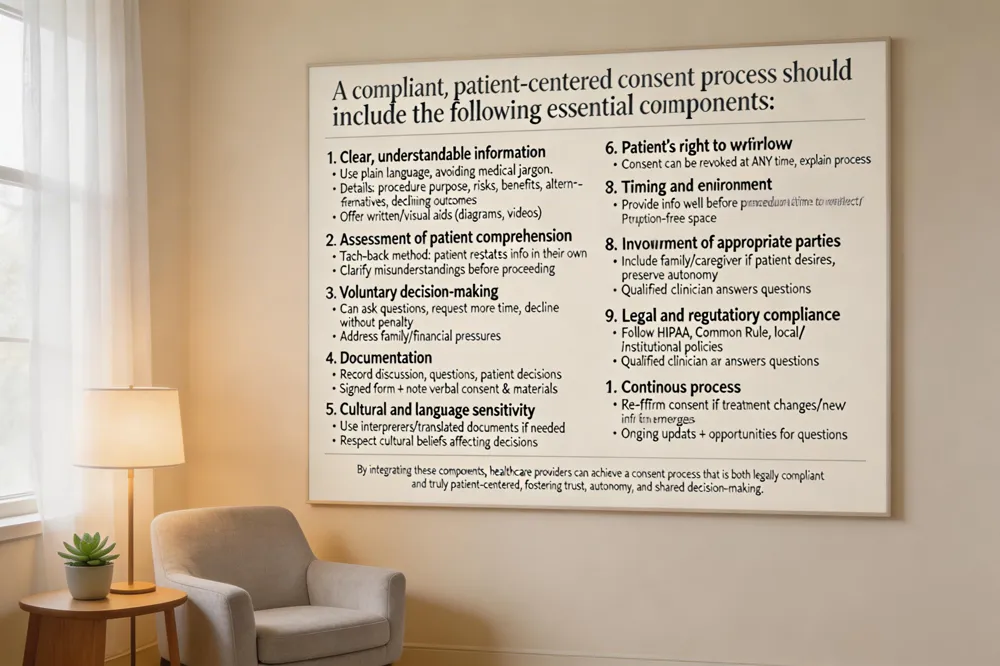
Informed consent is a communication process by which a clinician explains a proposed medical procedure—including its purpose, benefits, risks, and alternatives—so the patient can make a voluntary, educated decision. It respects autonomy, builds trust, and satisfies both ethical and legal standards. The FDA requires that consent be prospective, written in language the patient can understand, and free of exculpatory clauses. It must describe the investigation or treatment, foreseeable risks and discomforts, potential benefits, alternatives, confidentiality protections, contact information, compensation for injury, and the right to withdraw without penalty. The form must be signed and dated by the patient or authorized representative before any intervention and reviewed by an IRB; electronic consent is acceptable if it meets these criteria.
A valid consent contains five essential elements: (1) comprehensive disclosure of relevant information, (2) patient comprehension, (3) voluntary decision‑making, (4) patient competence, and (5) explicit affirmation, usually a written signature.
Not all medical activities need a separate consent; routine low‑risk procedures like basic blood draws are covered by general admission consent. However, any intervention with notable risk, viable alternatives, or that is not standard care—such as surgeries, hormone optimization, injectable fillers, or endoscopic diagnostics—requires a specific informed‑consent discussion and documentation. In emergencies, treatment may proceed without prior consent, but the patient must be informed as soon as feasible.
Doctor‑Led Care vs. Informed‑Consent Model

Traditional gate‑keeping models require a mental‑health referral and extensive paperwork before hormone therapy can begin, often delaying care and adding unnecessary bureaucracy. The informed‑consent model flips this paradigm: once a clinician has confirmed a patient’s capacity and explained the benefits, risks, and alternatives, treatment can start without a therapist’s letter, allowing faster access and greater patient autonomy.
At BeYounger Clinic the hybrid approach merges the strengths of both. Patients first complete a detailed intake, undergo baseline laboratory testing (CBC, liver function, lipid panel, hormone levels, blood pressure, weight), and receive personalized dosing recommendations from Dr. Barry Dinner and his physician‑led team. Simultaneously, the clinic follows a rigorous informed‑consent process—standardized forms, clear discussion of short‑ and long‑term effects, alternatives, and the right to withdraw—ensuring the patient fully understands the therapy.
Is it better to get HRT with a doctor or informed consent?
Getting HRT under a physician‑led program provides comprehensive medical oversight, baseline labs, individualized dosing, and ongoing safety monitoring that reduce complications and optimize results. The informed‑consent model emphasizes autonomy and can start treatment quickly after a clear risk of risks, benefits, and alternatives. BeYounger Clinic blends the two: you receive the thorough education and consent documentation of the informed‑consent model while also benefiting from doctor‑directed evaluation, lab work, and personalized follow‑up. This hybrid strategy ensures both safety and empowerment, especially for men seeking hormone optimization for vitality and performance. For most patients, the best outcome comes from combining physician supervision with informed‑consent principles.
Hormones That Promote a Youthful Appearance

Human growth hormone (HGH) is the primary hormone linked to a more youthful appearance because it drives cell regeneration, boosts collagen production, and helps maintain skin elasticity. In women, estrogen supports collagen synthesis and skin hydration, reducing fine lines and dryness. Men benefit from testosterone, which preserves skin thickness, muscle mass, and overall vitality that also contributes to a younger look. DHEA, a precursor to both estrogen and testosterone, can further enhance skin health and energy levels when balanced. Together, optimized levels of these hormones—achieved through personalized, physician‑guided therapy—can improve skin texture, reduce wrinkles, and promote a fresher, more youthful complexion. At clinics such as BeYounger, the informed‑consent model ensures patients receive detailed education on benefits, risks, and alternatives before starting hormone optimization. Baseline laboratory testing (CBC, liver function, lipid panel, hormone levels) and ongoing monitoring protect safety while allowing clinicians to tailor doses of HGH, estrogen, testosterone, and DHEA to individual goals. This collaborative, patient‑centered approach not only supports aesthetic outcomes but also enhances overall vitality, mood, and metabolic health, offering a comprehensive pathway to a more youthful, vibrant self.
Safety Monitoring and Laboratory Testing

Baseline laboratory testing is the cornerstone of a safe hormone‑optimization program. Before any estrogen, testosterone, or bioidentical hormone is prescribed, clinicians obtain a full blood count, liver function tests, fasting glucose and lipid panel, and serum hormone levels (estradiol, testosterone, progesterone as indicated). Blood pressure, weight, and a review of preventive health needs (cervical cancer screening, STI testing, contraception, colorectal cancer screening) are also completed, as recommended by the Endocrine Society and WPATH guidelines.
After therapy is initiated, regular follow‑up labs are performed every 3–6 months to detect early adverse effects and to titrate dose to the lowest effective level. Monitoring includes repeat CBC, liver enzymes, lipid panel, and hormone concentrations, as well as specific tests for known risks: hematocrit for polycythemia in testosterone users, potassium and kidney function for spironolactone, and thyroid function for estrogen recipients. Patients with a history of clotting disorders, cardiovascular disease, or hormone‑sensitive cancers receive more frequent testing and may be steered toward transdermal formulations, which carry a lower risk of venous thromboembolism.
Professional societies such as the Endocrine Society, the World Professional Association for Transgender Health (WPATH), and the American Medical Association endorse this structured monitoring plan. Their standards emphasize individualized dosing, documentation of patient understanding through informed‑consent forms, and ongoing risk‑mitigation strategies—including lifestyle counseling, fertility preservation discussions, and prompt attention to any new symptoms. By adhering to these evidence‑based guidelines, clinics like BeYounger Clinic can optimize benefits while minimizing the potential harms of hormone therapy.
What to Expect at BeYounger Clinic

When you first contact BeYounger Clinic, the process begins with an intake questionnaire that captures your medical history, current symptoms, lifestyle factors, and personal goals for vitality and anti‑aging. Within the next 2‑3 consultations, a physician‑led team—including Dr. Barry Dinner, a board‑certified Anti‑Aging and Functional Medicine Specialist—reviews the questionnaire, conducts a thorough physical exam, and orders advanced baseline laboratory testing (CBC, liver function, fasting glucose, lipid panel, hormone panels, blood pressure, and weight). These labs provide the data needed to create a personalized health plan that tailors hormone optimization (bioidentical or FDA‑approved formulations) to your unique endocrine profile while integrating stress‑management, purpose‑in‑life, social, and spiritual health components.
The clinic’s staff assists you in navigating insurance benefits, prior‑authorizations, and any out‑of‑pocket costs, ensuring you understand coverage options and can access affordable medication through GoodRx or pharmacy pricing tools. All health information is protected under HIPAA, with transparent privacy policies and secure messaging platforms that keep your data confidential and accessible only to your care team.
Beyond hormone optimization, BeYounger Clinic offers a suite of anti‑aging services—including sexual performance enhancement, facial rejuvenation, and functional wellness coaching—all delivered within a regenerative and longevity framework that emphasizes both safety and sustained vitality.
Putting Informed Consent Into Practice
Empowering patients through education begins with clear explanations of hormone benefits, risks, and alternatives, using written summaries so individuals can ask questions and make decisions that reflect personal goals. Balancing safety with autonomy means clinicians assess capacity, screen for absolute and relative contraindications, and schedule baseline labs while respecting the patient’s right to decline or adjust therapy at any time. Choosing a trusted, physician‑led clinic—such as the BeYounger Clinic—provides dosing, monitoring, and adherence to Endocrine Society and WPATH guidelines, ensuring expertise and patient‑focused comprehensive care.