
Introduction
Facial rejuvenation in the United States now revolves around three evidence‑based modalities: laser resurfacing (both ablative and non‑ablative fractional systems), autologous platelet‑rich plasma (PRP), and peptide‑rich topical or injectable agents. Each targets a distinct aging pathway—lasers create controlled micro‑injuries that trigger neocollagenesis, PRP supplies concentrated growth factors to accelerate healing and collagen synthesis, and peptides signal fibroblasts to maintain extracellular‑matrix production. When combined, these technologies produce synergistic outcomes: laser‑induced channels enhance PRP penetration, PRP’s growth factors prime the dermis for peptide signaling, and peptides sustain matrix remodeling between visits. At BeYounger Clinic, a physician‑led, board‑certified practice in San Francisco, protocols are customized, skin type, phototype, and aesthetic goals, ensuring safety, optimal dosing, and durable anti‑aging results.
Understanding Laser Resurfacing Options
What types of laser treatments are available for facial rejuvenation?
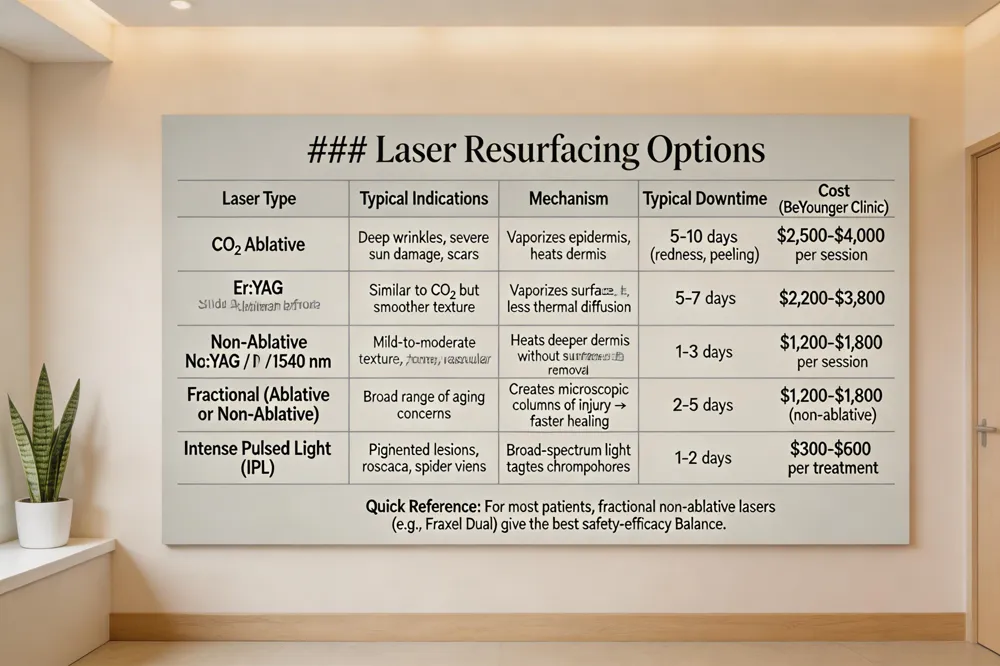
Ablative lasers such as CO₂ and Er:YAG vaporize the epidermis and heat the dermis, targeting deep wrinkles, scars and severe sun damage. Non‑ablative lasers (Nd:YAG, diode, 1540 nm) heat deeper layers without removing the surface, ideal for mild‑to‑moderate texture and tone improvement. Fractional technology—either ablative or non‑ablative—creates microscopic columns of controlled injury that accelerate healing while delivering effective resurfacing. Intense Pulsed Light (IPL) addresses pigmented and vascular lesions, reducing age spots, rosacea and spider veins.
What is the best laser facial rejuvenation option for most patients?
Fractional non‑ablative lasers (e.g., Fraxel Dual) offer the optimal blend of safety, efficacy and minimal downtime for the majority of patients. They stimulate collagen remodeling through micro‑columns while preserving surrounding skin, suitable for a wide range of skin types.
What side effects can occur from laser treatment on the face?
Typical transient effects include redness, swelling, mild burning and temporary pigment changes (hyper‑ or hypo‑pigmentation). Rare but serious complications are infection, scarring or prolonged hyperpigmentation, more common with ablative devices.
What is the cost of laser facial rejuvenation at BeYounger Clinic?
Non‑ablative fractional sessions range $1,200‑$1,800; ablative CO₂ sessions $2,500‑$4,000. Combined laser + PRP $1,800‑$2,500.
What does a laser facelift (laser skin resurfacing) cost?
Small‑area non‑ablative $300‑$600, full‑face non‑ablative $800‑$1,500, deep ablative CO₂ $2,000‑$4,500; larger hybrid or neck‑chest treatments can exceed $5,000.
Platelet‑Rich Plasma (PRP) in Facial Rejuvenation
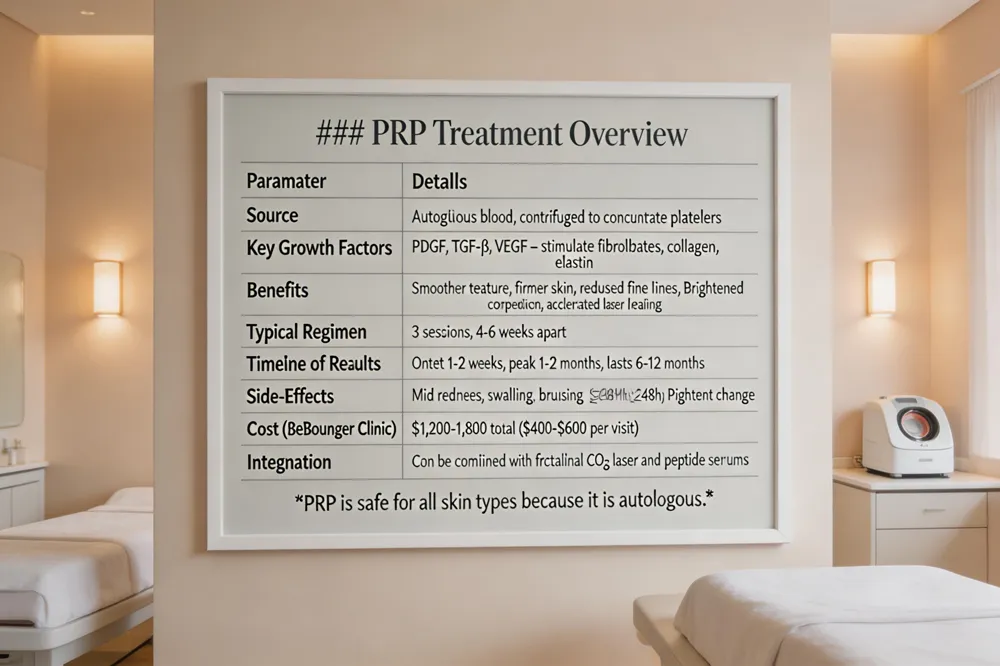 PRP (Platelet‑Rich Plasma) is prepared from a patient’s own blood, concentrated, and injected into the skin to deliver growth factors that stimulate collagen synthesis and tissue regeneration. The autologous nature eliminates allergic risk while delivering PDGF, TGF‑β, and VEGF that stimulate fibroblasts, boost collagen and elastin synthesis, and improve micro‑circulation. Benefits include smoother texture, firmer skin, reduced fine lines, and a brightened complexion; PRP also accelerates healing after laser resurfacing or microneedling, shortening downtime. Results typically emerge within 1‑2 weeks, peak at 1‑2 months, and last 6‑12 months, with maintenance every 6‑12 months for sustained effect. Common side‑effects are mild redness, swelling, bruising, or pinpoint bleeding that resolve in 48 hours; rare complications (infection, pigment changes) are minimized by sterile technique. A standard three‑session series at BeYounger Clinic costs $1,200‑$1,800 ($400‑$600 per visit). The clinic, located in San Francisco, offers integrated anti‑aging protocols that combine fractional CO₂ laser, PRP, and peptide‑rich serums for comprehensive facial rejuvenation.
Peptide Therapies: From Topical Serums to In‑Office Injections
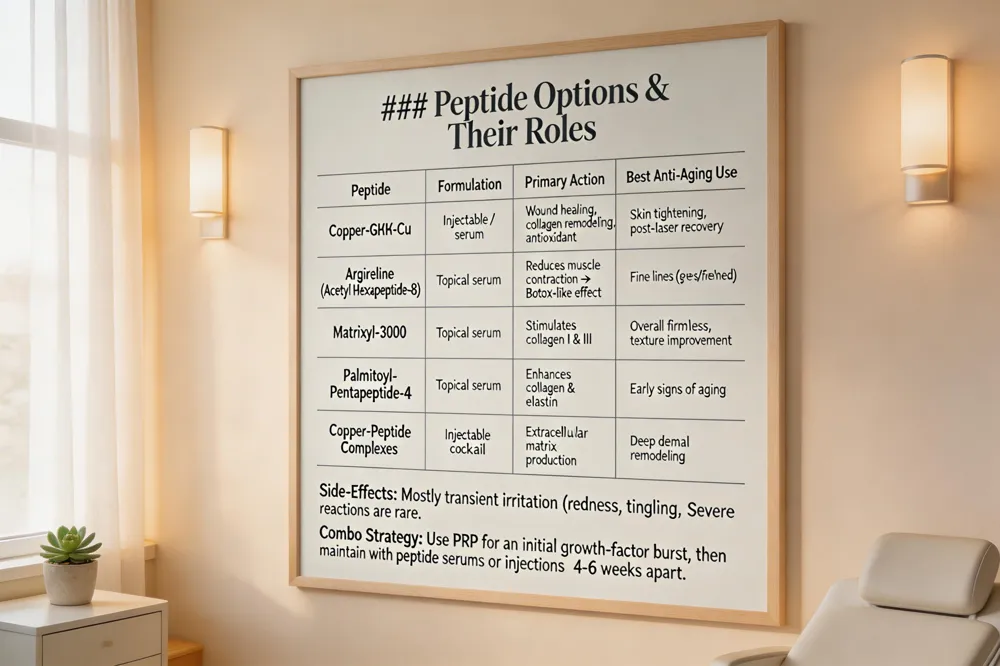 Peptides are short chains of amino acids that act as signaling molecules for skin cells. What are peptide skin‑care injections and how do they work? Injectable peptides (e.g., copper‑GHK‑Cu, Argireline, Matrixyl‑3000) are delivered directly into the dermis, where they bind fibroblast receptors and stimulate collagen, elastin, and hyaluronic‑acid production, yielding gradual, long‑lasting firmness and texture improvement. Which peptides are best for anti‑aging? Top clinical anti‑aging peptides include Matrixyl‑3000 (collagen synthesis), Argireline (Botox‑like muscle relaxation), copper peptide GHK‑Cu (wound healing & remodeling), palmitoyl‑pentapeptide‑4, and Acetyl‑hexapeptide‑8. Are there any side effects from using peptide skin‑care products? Most users experience mild, transient irritation (redness, tingling) that resolves as the skin adapts; severe reactions are rare. Can PRP and peptide therapy be performed together? Yes—PRP supplies growth‑factor bursts while peptides sustain matrix remodeling, accelerating healing and enhancing elasticity. Can I use peptide products after a laser treatment? Post‑laser peptide serums (copper, growth‑factor peptides) are ideal after the first 24 hours, reducing inflammation and boosting collagen without increasing downtime. What are the best injectable peptides for skin tightening? Injectable cocktails of copper‑GHK‑Cu, Argireline, and Matrixyl‑4000 delivered via micro‑injections or mesotherapy provide progressive dermal tightening when spaced 4‑6 weeks apart. These evidence‑based protocols, overseen by board‑certified physicians (e.g., BeYounger Clinic), offer a safe, synergistic approach to comprehensive skin rejuvenation.
Synergistic Protocols: Combining Laser, PRP, and Peptides
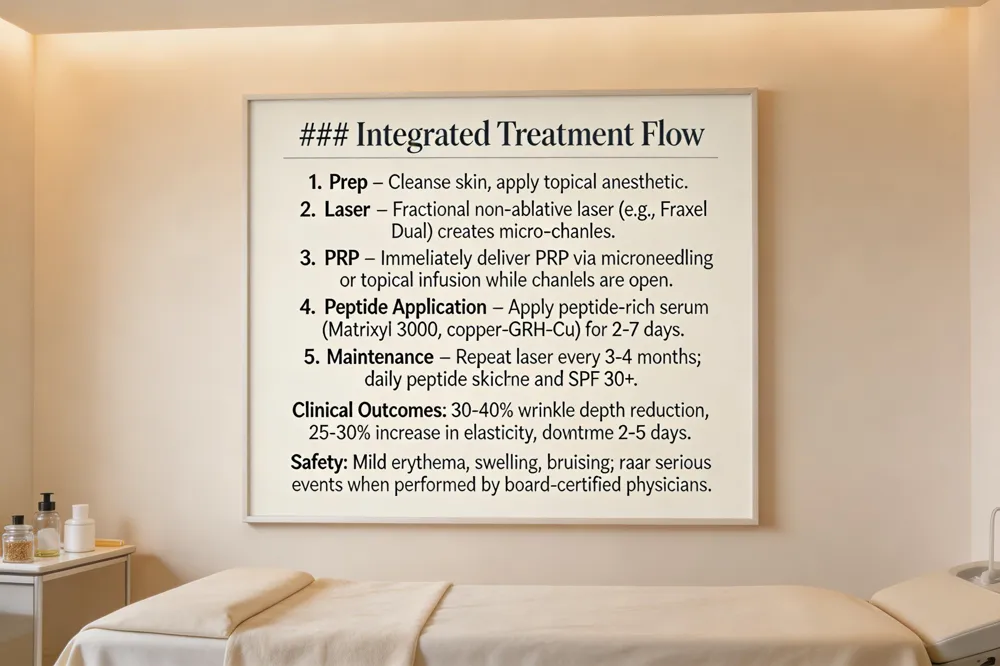 Clinical rationale for synergy Laser creates micro‑thermal zones that trigger collagen remodeling. PRP supplies autologous growth factors (PDGF, TGF‑β, VEGF) that accelerate fibroblast activity and tissue repair. Peptides (e.g., Matrixyl, copper‑tripeptide‑1) act as signaling molecules to sustain extracellular‑matrix synthesis. Together they address structural, cellular, and molecular aging pathways for more robust results.
Step‑by‑step treatment flow
- Cleanse and apply topical anesthetic. 2. Perform a fractional non‑ablative laser (e.g., Fraxel Dual) to create micro‑channels. 3. Immediately deliver PRP via microneedling or topical infusion while channels are open. 4. Apply a peptide‑rich serum (Matrixyl 3000, GHK‑Cu) for 2‑7 days to reinforce collagen and elastin production. 5. Repeat laser sessions every 3‑4 months; maintain daily peptide skincare and SPF 30+.
Patient outcomes and safety Clinical studies report 30‑40 % reduction in wrinkle depth and 25‑30 % increase in skin elasticity with the combined protocol, with downtime comparable to laser alone (2‑5 days). Adverse events are mild—temporary erythema, swelling, or bruising—and rare when performed by a board‑certified physician.
FAQ
Can laser resurfacing and PRP be performed together?
Yes. Fractional laser creates micro‑channels that allow deeper PRP penetration, enhancing collagen synthesis and accelerating healing.
How can I combine laser, PRP, and peptide therapies for anti‑aging?
Use a fractional laser, apply PRP immediately, then follow with peptide serums for the next week; repeat quarterly.
What is the best laser facial rejuvenation option for most patients?
Fractional non‑ablative lasers (e.g., Fraxel Dual) offer optimal safety and efficacy for early‑to‑moderate aging.
Can PRP and peptide therapy be performed together?
Yes; PRP jump‑starts repair while peptides sustain matrix production, yielding faster recovery and improved elasticity.
What are the best anti‑aging facial treatments offered at BeYounger Clinic?
Fractional CO₂ laser, ultrasonic tightening, RF, microneedling + PRP, customized peptide infusions, and targeted fillers.
What anti‑aging treatments are best for people in their 30s?
Gentle chemical peels, non‑ablative fractional laser, PRP‑microneedling, retinoids, antioxidant peptide serums, sunscreen.
What anti‑aging treatments are recommended for people in their 40s?
Fractional laser, light peels, RF tightening, PRP + peptide infusions, filler, neuromodulators.
What anti‑aging treatments are recommended for people in their 50s?
Ablative CO₂ laser, RF, Morpheus8, PRP, peptide therapy, fillers, hormone optimization when indicated.
What anti‑aging treatments are recommended for people in their 60s?
Ablative laser, RF/ultrasound tightening, autologous fat transfer + PRP, peptide support, hormone therapy, comprehensive skincare.
How can I take 20 years off my face?
- Fractional CO₂ laser resurfacing
- Upper/lower blepharoplasty
- Facial fat transfer
- PRP + peptide combo
- Hormone optimization
Practical After‑Care and Lifestyle Recommendations
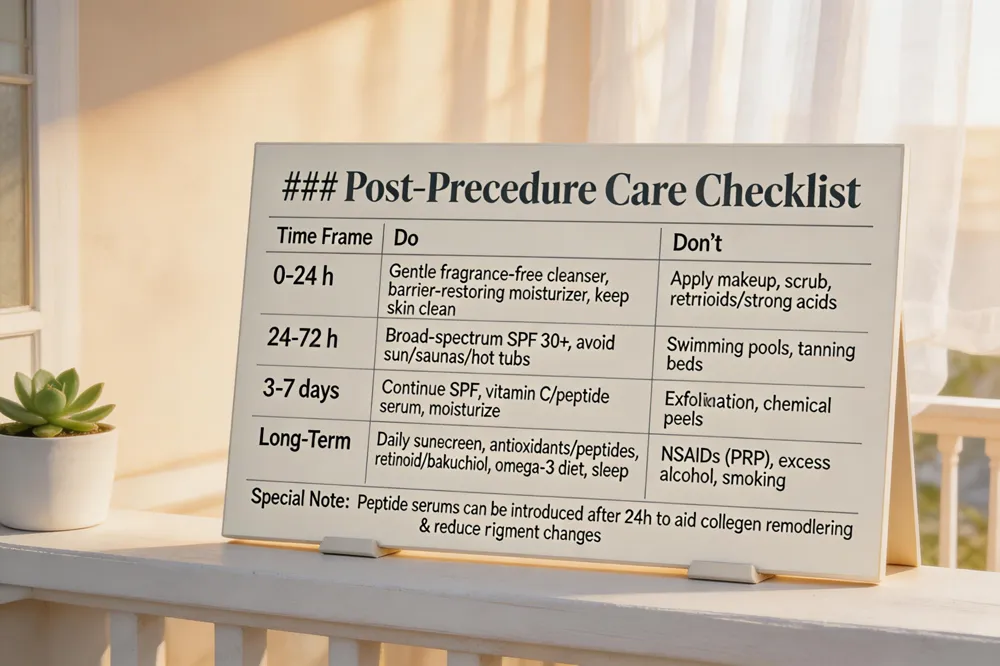 Immediate post‑procedure care after laser, PRP, and peptide treatments focuses on protecting the newly wounded skin and supporting healing. Apply a gentle, fragrance‑free cleanser and a barrier‑restoring moisturizer; avoid scrubbing, retinoids, or strong acids for the first 48‑72 hours. Use a broad‑spectrum SPF 30+ sunscreen as soon as the skin tolerates it, and keep the treated area out of direct sunlight, saunas, steam rooms, hot tubs, and vigorous exercise that induces heavy sweating.
Long‑term skin health habits include daily sunscreen, antioxidant serums (vitamin C, peptide blends like Matrixyl or Argireline), and regular low‑dose retinoid or bakuchiol use to maintain collagen turnover. Hydration, a balanced diet rich in omega‑3 fatty acids, and adequate sleep further sustain dermal elasticity.
What to avoid:
- After laser: no makeup, harsh cleansers, exfoliating acids, or swimming pools for 3‑5 days; avoid UV exposure without SPF.
- After PRP: limit NSAIDs, alcohol, and vigorous facial massage for 24‑48 hours; watch for persistent bruising or infection.
- Peptide products: discontinue if you experience persistent redness, tingling, or allergy to carrier ingredients.
Can peptide products be used after laser? Yes—once the initial 24‑hour healing window passes, a peptide‑rich serum (copper peptide, growth‑factor peptide) can be applied daily to accelerate collagen remodeling, reduce inflammation, and protect against pigment changes.
Home‑based anti‑aging care: sunscreen, antioxidant/peptide serums, gentle retinoids, low‑strength AHA/BHA exfoliation, and FDA‑cleared LED or microneedling devices can complement in‑office procedures for sustained results.
Cost Considerations and Personalized Planning
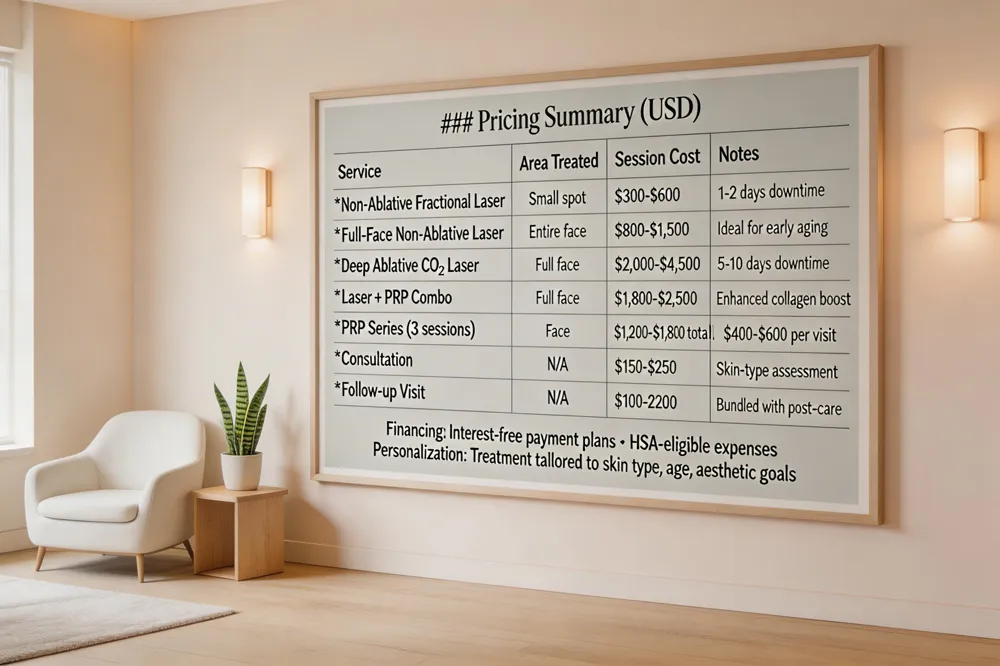 Laser resurfacing costs vary by device, depth, and treated area. A small spot or non‑ablative session typically runs $300‑$600; a full‑face non‑ablative light resurfacing $800‑$1,500; and a deep ablative CO₂ facial $2,000‑$4,500, with larger zones or neck/chest extensions reaching $3,000‑$6,000+. Consultations usually cost $150‑$250 and include a skin‑type assessment, treatment plan, and pre‑procedure preparation. Follow‑up visits are $100‑$200 each, often bundled with post‑care products. Most insurers label these procedures cosmetic, so coverage is rare, but many clinics offer financing, interest‑free payment plans, or Health Savings Account (HSA) eligibility.
How much does a laser facelift (laser skin resurfacing) cost? The price depends on laser type, depth, and area; ranges run from $300‑$600 for spot treatments, $800‑$1,500 for full‑face non‑ablative, and $2,000‑$4,500 for full‑face ablative CO₂, with larger combos exceeding $6,000.
What is the cost of laser facial rejuvenation at BeYounger Clinic? Non‑ablative fractional sessions $1,200‑$1,800; ablative CO₂ $2,500‑$4,000; laser + PRP combos $1,800‑$2,500.
What is the cost of a PRP facial therapy at BeYounger Clinic? A three‑session series totals $1,200‑$1,800, averaging $400‑$600 per visit, with optional laser or peptide add‑ons influencing the final price.
Choosing BeYounger Clinic for Your Regenerative Journey
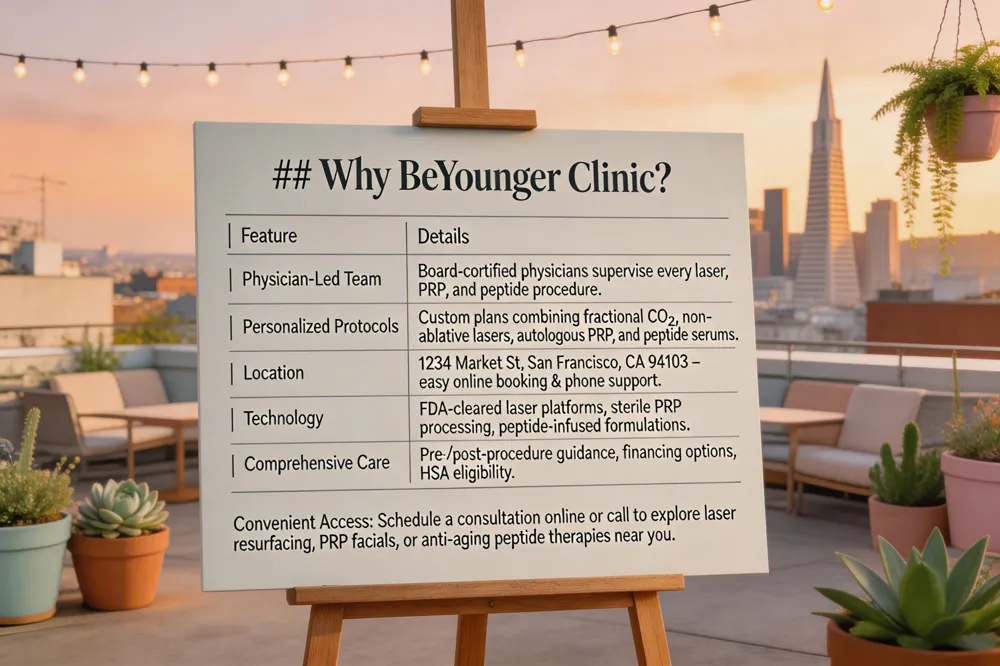 Physician‑led, board‑certified team – BeYounger Clinic’s board‑certified physicians supervise every laser, PRP, and peptide procedure, ensuring FDA‑cleared devices and sterile technique are used. Personalized protocols and technology – Each patient receives a custom plan that may combine fractional CO₂ or non‑ablative lasers, autologous PRP, and peptide‑infused serums tailored to skin type, age and aesthetic goals. Convenient location and patient support – Located at 1234 Market St, San Francisco, CA 94103, the clinic offers easy online booking, phone consultations, and comprehensive pre‑/post‑care guidance.
Where can I get laser facial rejuvenation near me? – BeYounger Clinic offers physician‑led laser resurfacing with fractional CO₂, Nd:YAG and ultrasonic platforms; schedule a consultation online or call.
Where can I find a PRP facial near me? – The clinic provides autologous “vampire” PRP facials in a sterile, physician‑supervised setting; contact them to book.
Where can I find an anti‑aging facial near me? – At BeYounger Clinic’s San Francisco office, receive a customized anti‑aging facial integrating laser, PRP and peptides.
What alternatives do celebrities use instead of Botox for wrinkles? – Celebrities favor PRP microneedling, fractional lasers, chemical peels, light‑therapy and peptide serums for natural collagen stimulation.
What anti‑aging treatments are recommended for people in their 30s? – Sun protection, retinoids, antioxidant peptide serums, non‑ablative fractional laser, microneedling with PRP, and occasional neuromodulator or filler for emerging lines.
What anti‑aging treatments are recommended for people in their 40s? – Fractional laser or light chemical peels, RF/ultrasound tightening, microneedling with PRP/peptides, dermal fillers, and hormone optimization when indicated.
What anti‑aging treatments are recommended for people in their 50s? – Ablative CO₂ laser, Morpheus8 RF microneedling, PRP, peptide infusions, fillers, neuromodulators, and hormone support.
What anti‑aging treatments are recommended for people in their 60s? – Ablative laser resurfacing, RF/ultrasound tightening, autologous fat transfer with PRP and peptides, hormone replacement, and a prescription‑strength skincare regimen.
Conclusion
The combined regimen of fractional laser resurfacing, autologous platelet‑rich plasma (PRP), and peptide‑enriched topical serums creates a powerful synergy: lasers generate controlled micro‑injuries that trigger collagen remodeling, PRP delivers growth‑factor‑rich platelets that accelerate healing and fibroblast activity, and peptides (e.g., Matrixyl®, copper‑GHK‑Cu, Argireline®) signal cells to sustain extracellular‑matrix synthesis. This multimodal approach yields greater reduction of fine lines, improved texture, and lasting elasticity than any single modality. Because each step involves precise energy delivery, sterile blood handling, and active‑strength formulations, it must be performed under board‑certified physicians who can assess skin type, manage contraindications, and tailor protocols for optimal safety and efficacy. Readers interested in this comprehensive anti‑aging strategy should schedule a consultation with a qualified regenerative clinic, discuss personalized treatment plans (typically 3‑6 sessions spaced 4‑6 weeks), and commit to post‑procedure care—including sun protection, gentle moisturization, and ongoing peptide use—to maximize and maintain results.